


Workflows run the work. Cases keep it on the record.
Workflows automate repeatable processes. Cases track each run with status, ownership, approvals, exceptions, and a complete audit trail from start to finish.
What it does
Built to run in production, not once.
A workflow is the automation; a case is the work moving through it. Both are built for the messy reality of operations.
01
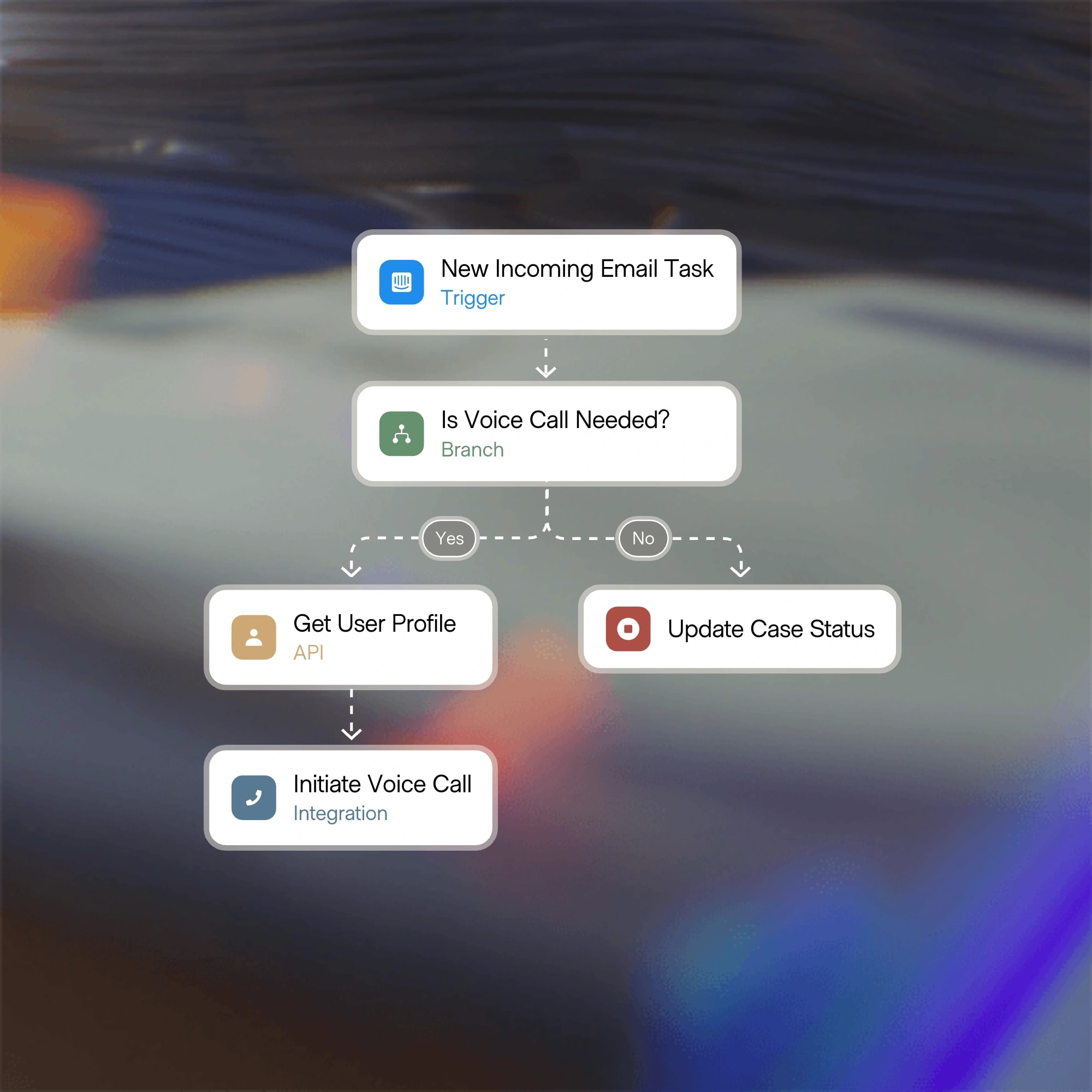
Visual node graph
Actions, decisions, and integrations, with real control flow.
- AI reasoning, code, API calls, and browser actions as nodes.
- Branches, loops, and sub-workflows for logic that isn't a straight line.
- Triggered manually, on a schedule, by webhook, or by a case update.
02
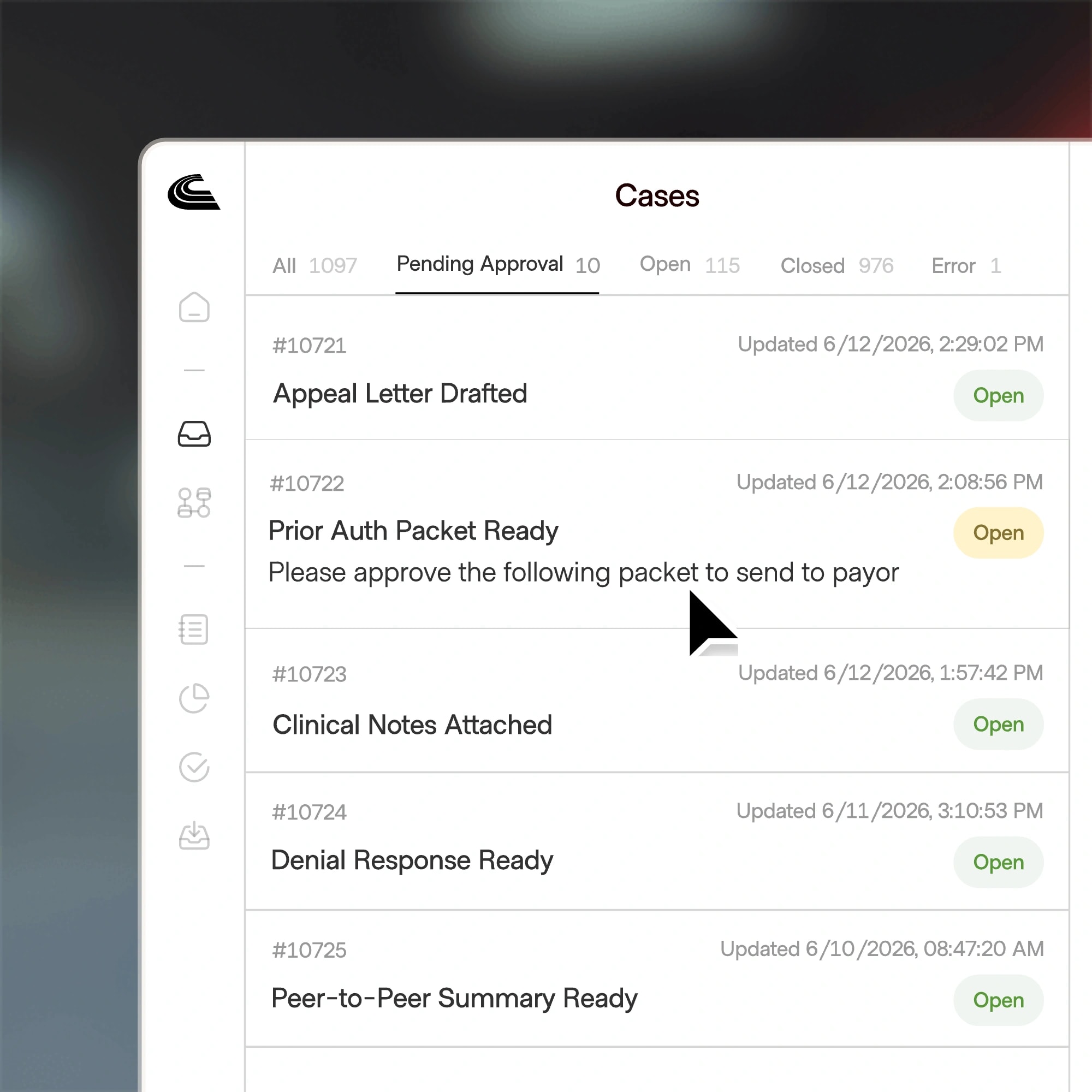
Cases
Structure for every piece of work moving through.
- A typed attribute schema and status lifecycle for each item.
- An append-only event log gives every case a full audit trail.
- Sync cases in from ticketing systems and inboxes, or create them over REST.

Workflow → cases → audit
Work moves through as cases you can track.
From trigger to write-back, every item that runs is structured and on the record.
Book a demoBuild the workflow
A visual node graph of AI reasoning, code, API calls, and browser actions, with branches, loops, and sub-workflows.
Run work as cases
Every item flows through as a case with a typed schema and status lifecycle, synced from your ticketing systems, inboxes, or the API.
Everything on the record
Each run captures the graph as it was, with an append-only event log, so later edits never rewrite history.
Where it runs
Cloud by default. Inside your network when it has to be.
Cloud by default
Isolated cloud sessions, screenshot-recorded and replayable by default.
VPC / on-prem
The same runtime deploys inside your network for regulated buyers: HIPAA, SOC 2.
Per-run isolation
No cross-contamination between workflows or tenants.
Scoped vaults
Per-workflow encrypted credential storage, never written to logs.
What you can automate
Workflows teams run on Champ every day.
A sample of the operational jobs our customers automate end-to-end.

Provider credentialing
CAQH ProView, NPPES, state licensing boards, payer enrollment.

Insurance eligibility
Availity, Navinet, payer portals. Pull benefits, copays, prior-auth status.

Claims follow-up
Check status across payer portals; trigger follow-ups on denials.

State agency portals
50+ tax, unemployment, and labor agencies - status checks and filing confirmations.

Price monitoring
Track competitor pricing across e-commerce and marketplace sites.

Invoice reconciliation
Pull invoices and tax docs from vendor portals; match to ERP.