


Modern Browser Automation vs. RPA: Faster to Build, Easier to Maintain
RPA can automate browser work, but often brings specialized development and a large maintenance surface. See how Champ uses an AI builder, cloud browsers, deterministic execution, and AI recovery to build faster and stay reliable.

RPA made it possible to automate work through software interfaces, including web portals. Its tradeoff is the amount of enginee
ring and operating machinery each workflow can require: specialized builders, robot runtimes, orchestration, credentials, infrastructure, and a maintenance queue.
Modern browser automation takes a different approach. Champ can start from an SOP or recorded workflow, use an AI builder to create the first version, and run it in cloud browsers. Known steps execute deterministically. When the live page no longer matches the tested path, AI can recover the step inside the same session.
The practical difference is how quickly a team can move from process knowledge to production automation, and how much work it takes to keep that automation running. Champ's managed operating model adds accountability, but the product advantage begins with a smaller build and maintenance surface.
RPA turns each workflow into a software project
RPA platforms were built for a different era of enterprise software. Their model treats automation as a development discipline organized around specialized studios, activities, selectors, orchestrators, robot runtimes, and governance.
The customer or an implementation partner still has to translate the process into automation logic, provision the runtime, test and deploy changes, monitor failures, and repair the workflow when an application moves. For a large automation program, those responsibilities become a center of excellence and a permanent maintenance queue.
Modern browser automation starts with the workflow
Champ starts closer to the way an operations team already understands the work. Give Champ the SOP, record the workflow, or demonstrate the completed outcome. The AI builder turns that process knowledge into an initial automation that can be reviewed and improved quickly.
That shortens the distance between knowing how a process works and having it run in production. Operations experts can validate the workflow without first translating every decision into an RPA implementation project, while engineers can still add code, APIs, and explicit logic where they are useful.
Cloud browsers remove runtime overhead
Champ runs browser workflows in managed cloud browsers. Sessions, browser state, profiles, recordings, and execution evidence are part of the runtime, so teams do not need to provision desktops, virtual machines, or fleets of bot machines for portal work.
Cloud execution also makes browser capacity easier to scale and inspect. A workflow can use the right approved profile, preserve state across steps, and leave behind a complete record of what happened.
Deterministic execution keeps known work predictable
A production workflow should not ask an AI model to improvise every click. Stable actions are faster, less expensive, and easier to audit when they run deterministically against a validated target.
Champ uses deterministic execution as the default for known work. The same input follows the same tested path, with explicit checks that confirm the intended result. AI is reserved for the moments where interpretation adds value.
AI recovery reduces the maintenance surface
When a portal changes, a conventional automation often stops at the first broken selector and waits for a developer. Champ can hand the changed step to an AI browser agent inside the same live session, with the current page, workflow goal, and completed work still available.
If recovery succeeds, the run can continue instead of becoming an immediate operations incident. The recovery is captured so the durable workflow can be updated and the same exception does not need to be solved repeatedly.
Maintenance does not disappear. The meaningful difference is that small interface changes and unfamiliar states do not all become manual repair projects. That keeps the maintenance surface much smaller as the workflow ages.
Authentication is part of the runtime
Portal automation is only useful while it can get through the front door. Champ manages persistent browser profiles, session expiry, re-authentication, email and SMS verification, and approved credentials from 1Password, including TOTP codes.
Profile pools provide additional capacity when portals limit concurrent sessions or one identity needs attention. Authentication becomes an operated part of the workflow instead of a recurring implementation surprise.
Compare time to build and effort to maintain
Feature tables tend to compare designers, connectors, and AI claims. The more useful comparison follows the complete lifecycle of one real workflow.
- How quickly can an SOP or recording become a production workflow?
- Does execution require desktop or virtual-machine infrastructure?
- Who handles browser sessions, MFA, and profile health?
- Does an interface change stop the run or trigger adaptive recovery?
- How are successful recoveries turned into durable workflow updates?
- What evidence confirms that the business outcome completed correctly?
Why modern browser automation wins
Champ is built for recurring operations work that depends on web portals and needs to reach production quickly without creating another internal software program. Browser steps can share context with documents, APIs, code, calls, and human approvals inside one workflow.
Champ reduces the work required to create a browser workflow, removes much of the runtime infrastructure, and uses AI recovery to keep interface changes from becoming a permanent repair queue. Teams get reliable production automation without inheriting an RPA development and maintenance program.
For operations teams, that means more processes can be automated without turning automation itself into another operational burden.
Champ's managed service adds a final advantage: we stay accountable for the workflow after it launches. The product is easier to build and maintain, and the customer does not have to inherit the remaining operational work.
Continue evaluating modern automation
Best enterprise browser automation tools
Bring Champ a workflow
Show us the systems, inputs, exceptions, and completed result your team owns today. Champ will map how to build and operate it as a managed automation.
Continue reading
See all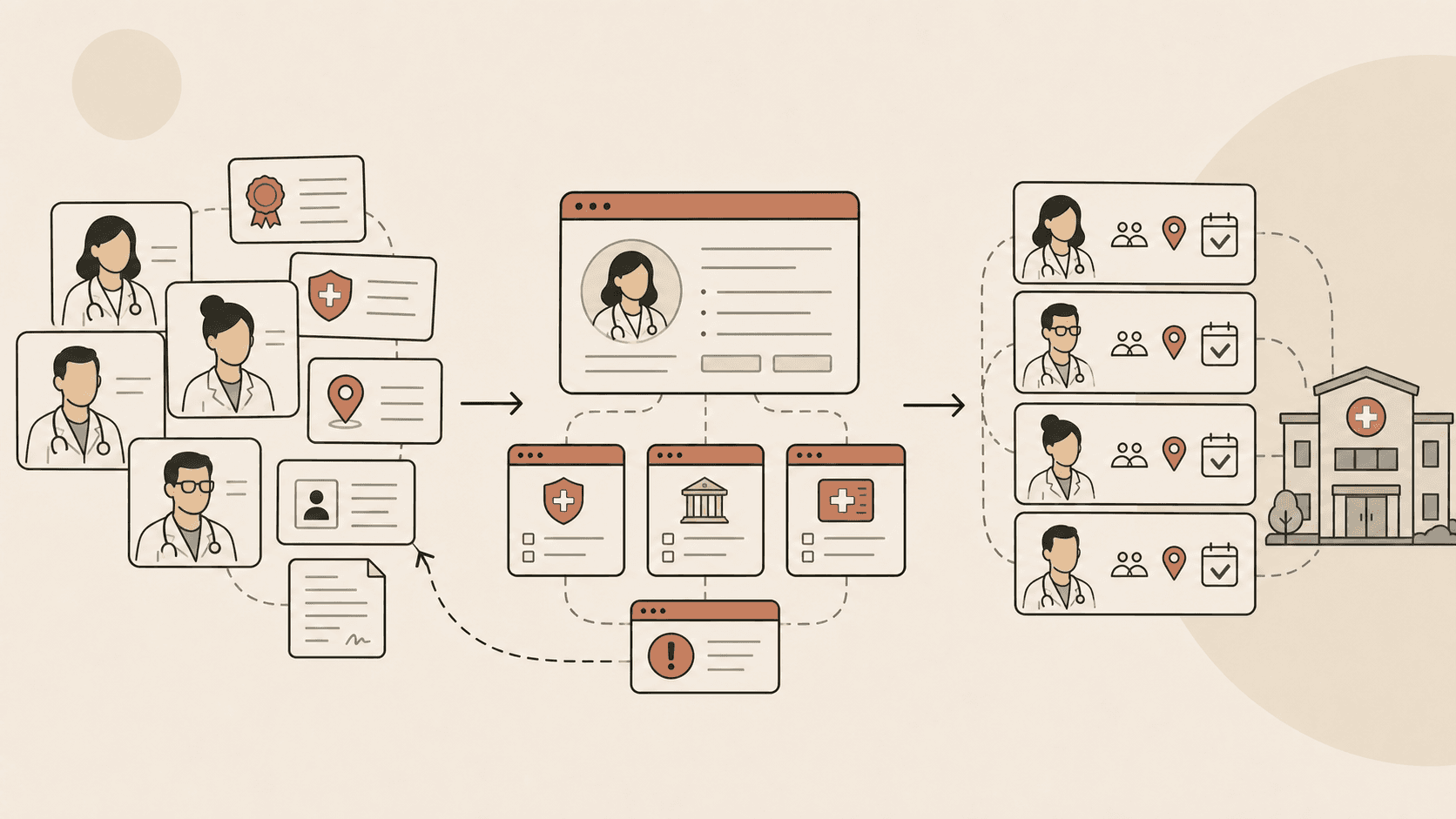
Provider Enrollment Automation for Non-Delegated Networks
How to automate CAQH profile maintenance, provider data collection, payer applications, status follow-up, and effective-date confirmation without replacing your credentialing system.

The Best UiPath Alternatives for Enterprise Operations
Compare the best UiPath alternatives for enterprise operations, from legacy RPA suites and workflow tools to Champ's managed, outcome-based automation model.

The Best Browser Automation Tools for Enterprise Operations
A direct comparison of Champ, developer browser tools, and legacy RPA platforms including UiPath and Automation Anywhere for enterprise operations.